Posts

6 Tips for Getting Your Kids into Fitness
Image
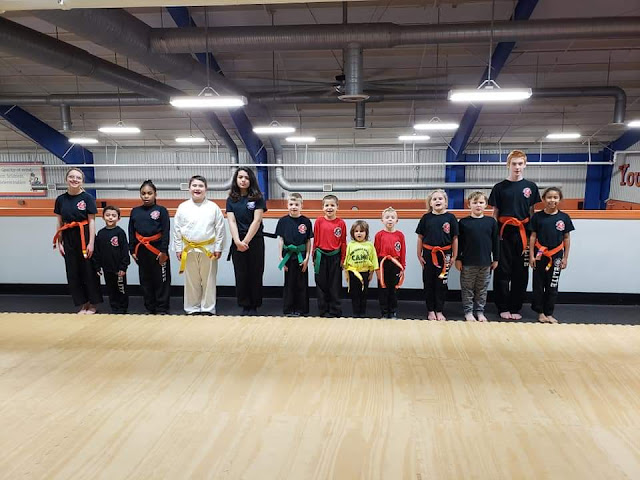
As a regular at the fitness gym, you’ve made exercise a priority, but have you thought about your children’s fitness, as well? It’s easy to assume kids get enough activity naturally and don’t have to worry about their fitness until later in life, but it’s the habits that are set in motion in childhood that will make a different in their health and fitness for years to come. Education Is Vital Kids do receive some health education in school, but parents play the most important role in teaching kids how to take good care of their bodies. Even if you practice healthy habits at home, it’s important to have conversations about why you do what you do and equip them to make their own healthy habits, both now and later. Here’s some advice on how to get your kids educated and interested in keeping fitness a priority. 1. Be encouraging rather than demanding. Getting kids into fitness isn’t the same as getting them to clean their rooms or do their homework. There are some things kids just need to...


Yes, You Can Train Yourself to Love Healthy Foods

Image
After eating all the rich foods that come with holidays, you think you’ve had your fill. But, ironically, doesn’t it seem even harder to turn down sweets and treats in the following weeks? If only we could learn to acquire such an addiction to healthy foods! The truth is that we can, but it will take more than just wishful thinking. Just like your fitness gym workouts, it takes training, gradual changes, repetition, and variety. The Basis of Flavor Learning Although there’s some evidence we natural prefer certain flavors, Pavlovian theory strongly suggests we mostly learn to enjoy flavors. The initial reason we eat a certain food may be that we prefer its flavor, but the more often we eat it, the more we enjoy it for other reasons such as texture, smell, and other nuances. For example, studies suggest that if children are first fed sweetened vegetables, they may eventually learn to like plain vegetables. The key is to use this behavior to train ourselves to enjoy not just the flavor bu...

Food Journaling: Track Your Eating Patterns for Long-term Success

Image
Does it seem like, no matter how hard you work out at the fitness center, the scale isn’t budging? Weight loss plateaus happen for many reasons, but one culprit could be hidden calories. How carefully do you track what you put in your mouth, if you even track it? Even if you’ve been good about eating healthy, prepped meals, little things like calorie-laden espresso drinks, the office candy bowl, mindless snacking on “just a few” chips while watching television can all add up to sabotage your goals. Taking the time to journal what you eat could be the key to uncovering bad habits and patterns and finally seeing that scale budge one again. In a study published by the American Journal of Preventative Medicine, those who recorded their intake experienced double the weight loss of those who didn’t. Here’s the basis of why food journaling works. • Food journaling forces mindfulness and keeps you accountable. Knowing you’ll have to write down what you ate makes you think twice about grabbing ...

4 Things You Can Do Immediately to Boost Your Metabolism

Image
Reducing the total number of calories we consume and focusing on the quality of foods we eat is one part of the ratio for weight loss, but there’s much more to it than that. There’s also the frequency and intensity with which we exercise at the fitness center, environmental factors, and the way we take care of our bodies. Here are four related ways you can positively impact your metabolism. Incorporate speed intervals into your cardio sessions.   Interval training has been on-trend for the past several years, and there’s a reason why – it gets results, often faster than steady-state cardio. Incorporating bursts of speed or sprints when you hit the treadmill, elliptical, stationary bike, or rowing machine at the fitness gym will not only increase your total caloric burn, but has been shown to stimulate a post-workout fat-burning reaction, revving your metabolism for faster results in less time. Take advantage of both acceleration and deceleration when weight lifting.   Lifting ...

4 Common Behaviors That Could Be Sabotaging Your Workouts

Image
 You don’t have a problem working out. In fact, you live for that 5 a.m. wake-up call! You’re consistent and you work hard. But, regardless of all the things you’re doing right, you’re still not seeing results a few months into your new routine at the fitness center. Is this you? Even the most dedicated of us can experience discouragement when we’re trying hard but not seeing our effort pay off. Before throwing in your sweat towel, consider these four surprising ways you could be unknowingly sabotaging yourself. Does any of this ring true? #1: You’re working out too much. Do you regularly put in more than an hour at the gym, going from fitness classes to weights to cardio? Even though it seems like increasing the length of time you work out would accelerate your results, it can also burn you out. When your energy lags, so will the quality of your workouts and your results. Your form will also suffer, placing you at a higher risk for an overuse injury. Try to limit your sessions to...

Why Am I Gaining Weight From Working Out?

Image
People choose to start working out for a variety of reasons, but the most common reason is to lose weight. So if you have been hitting the gym and then the scale and have watch as that pesky number rises, you may, understandingly, be confused and worried. After all, you have been eating right, working out regularly, and maybe your clothes are even fitting differently, so why should your weight get higher? Don’t panic; the scale can often be quite deceiving. If you are doing the right things, there are four reasons why you might be gaining weight. Water Retention Believe it or not, water retention can account for as much as 10 pounds of your weight! If you have had a great workout and feel a bit slimmer, don’t start celebrating yet; you’ve likely just shed water weight. On the flipside, if the number on the scale has risen, it can also be due to exercise, as sometimes working out makes you retain more water. Water makes the number on the scale a far less reliable means of measuring weig...

5 Top Running Myths

Image
 Are you considering becoming a runner? Do you regularly hit the treadmill as part of your new fitness center routine? If so, you may have heard a few of these running myths, or – even worse –believe them to be true. Myth #1: You need a “runner’s body” to become a runner. If you visit any 5K race, you’ll see runners of all shapes, sizes, and strides. Anyone with a body can become a runner, so don’t fall for the myth that you’re not built for endurance or speed. Get out there and do your body some good! If you enjoy it, that’s all that matters. Myth #2: Running is bad for your knees. There’s no proof that running is any worse for your knees than any other form of high-impact exercise. If you already have a knee condition or you’re at risk for one, running could cause it to flare up. But, again, so would any other type of vigorous exercise. It might surprise you to learn that running can be beneficial for your knees and bones because it strengthens the muscles surrounding them, and a...